
Last year the CVE Program published more than 48,000 new vulnerability records, roughly 130 or more every day. Scanning and AI have made finding exposures easier. The harder problem is volume: deciding which ones create meaningful business risk and which ones wait.
That is the problem Continuous Threat Exposure Management (CTEM) is designed to address.
CTEM is a cybersecurity program introduced by Gartner. It is not a product you buy off the shelf. SANS puts it bluntly: you cannot buy “CTEM-in-a-box.” Instead, CTEM is a continuous cycle for identifying what matters to the business, finding the exposures around it, prioritizing with real context, validating exploitability, and mobilizing owners to fix what actually hurts.
The useful question stops being “What vulnerabilities do I have?” and becomes:
What can actually hurt me, and what should I do about it?
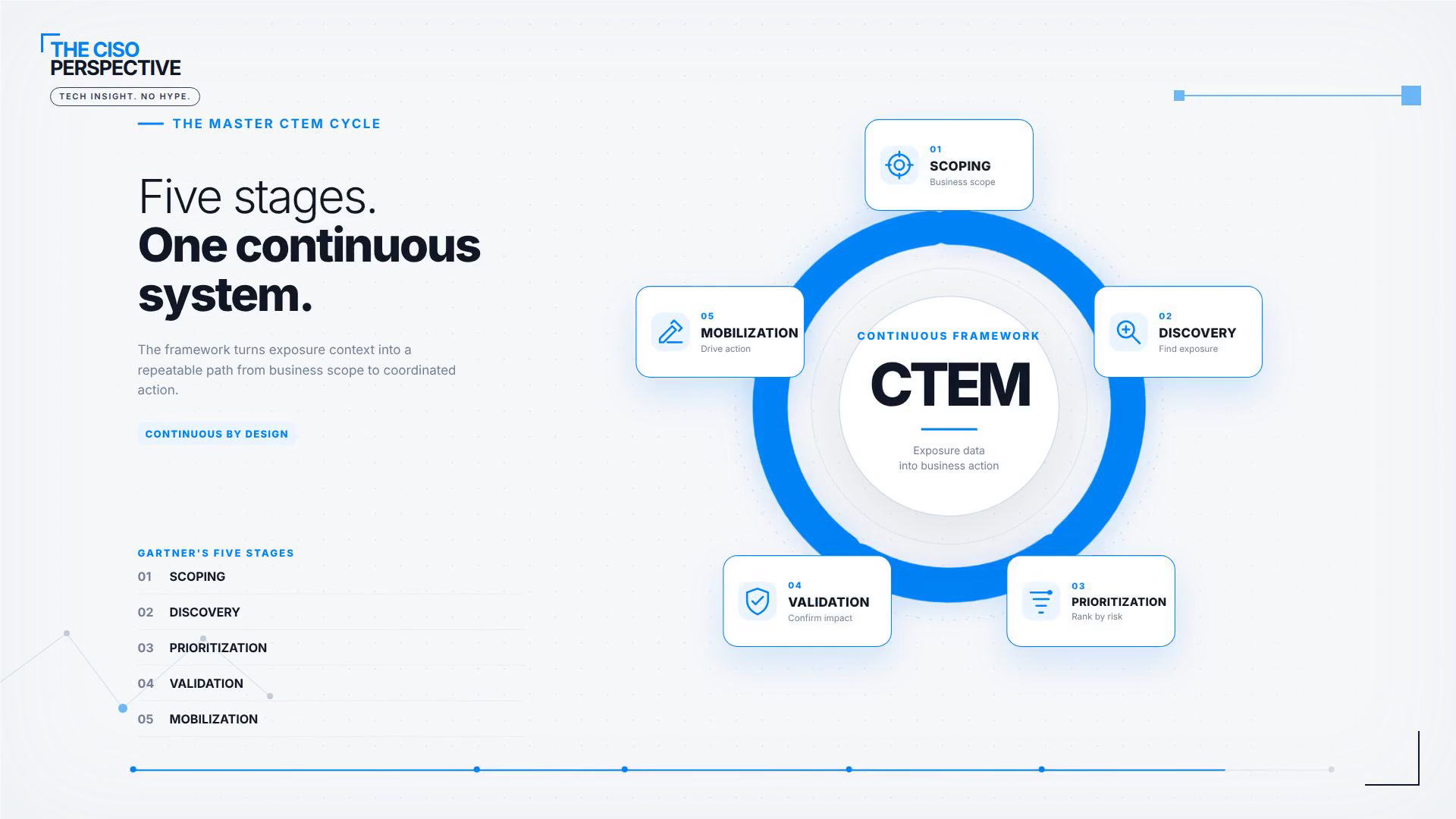
The five stages at a glance
Gartner frames CTEM as five stages: Scoping, Discovery, Prioritization, Validation, and Mobilization.
- Scoping. Start with business-critical assets, such as e-commerce, not every IP.
- Discovery. Vulnerabilities, misconfigurations, weak controls, and related exposures in that scope.
- Prioritization. Beyond CVSS: KEV, EPSS, asset criticality, exploitability, and existing controls.
- Validation. Pen test, red team, or breach and attack simulation. Prove the path.
- Mobilization. Owners, tickets with context, SLAs, and re-validation after the fix.
Stage 1: Scoping
Gartner’s guidance starts with what is important to the business and where impact would justify remediation.
Instead of beginning with every IP, application, and finding, start with something critical, for example the company’s e-commerce platform, then work backward: supporting applications, databases, identities, cloud resources, and internet-facing systems. CMDBs, asset inventory, attack surface management, cloud, and identity tools help build the picture. The tools do not decide what matters. The business does.
Stage 2: Discovery
Discovery is more than a vulnerability scan. You are looking for vulnerabilities, misconfigurations, weak controls, and other exposures an attacker might use. Scanners, attack surface management, cloud security, identity, and configuration data come together into a fuller inventory within the scope you already set.
You are not ranking yet. You are completing the map of what could create risk, which often means a large finding set going into the next stage.
Stage 3: Prioritization
This is where CTEM diverges from sorting a report by severity.
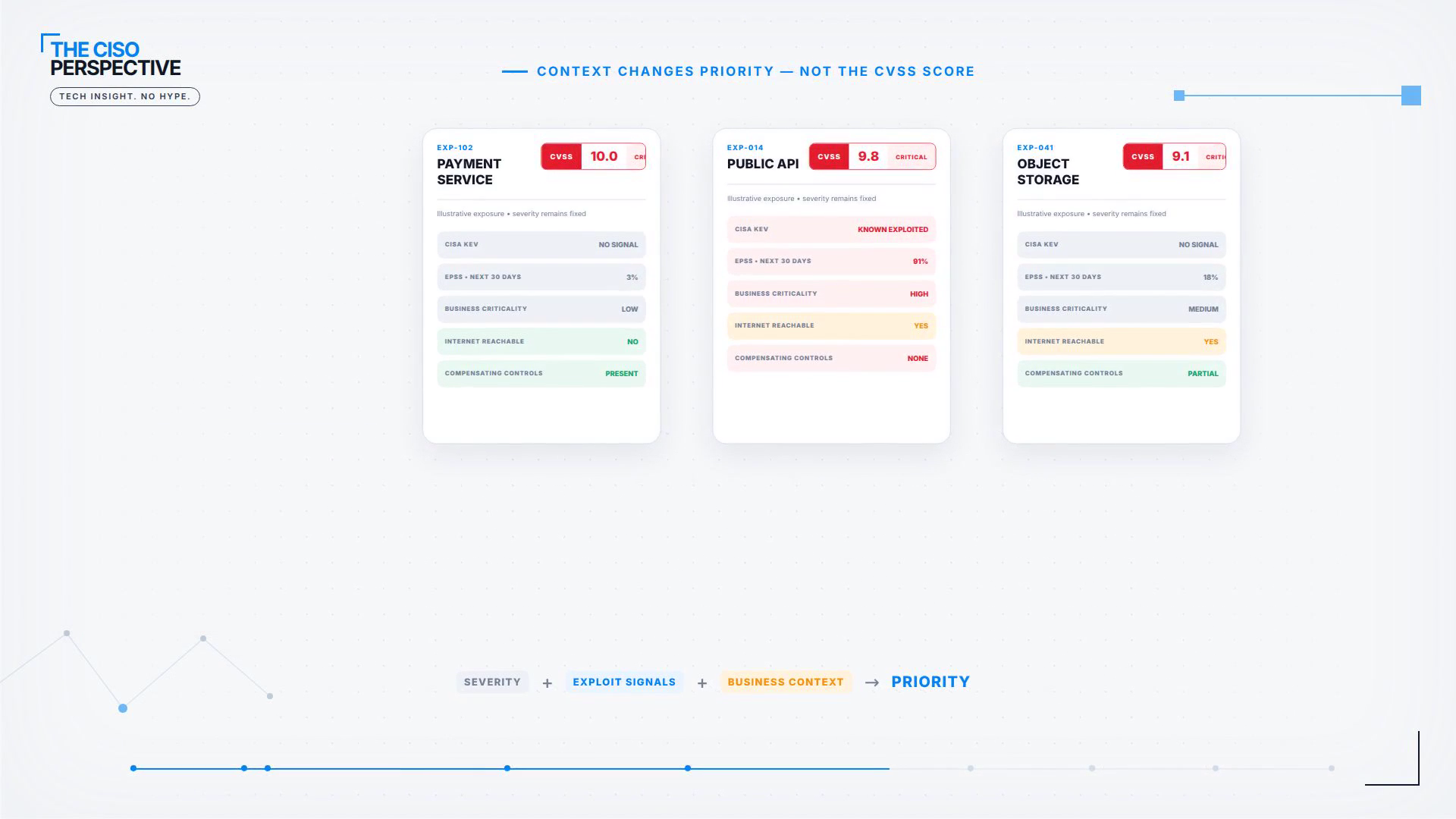
A CVSS score describes general severity. It does not tell you whether attackers are exploiting it, how likely exploitation is in the next 30 days, whether it touches a critical asset, or whether controls already reduce the risk.
Add context: CISA KEV (known exploited in the wild), EPSS (exploit probability), asset criticality, threat intelligence, exploitability, and existing controls. The output is a realistic picture of which exposures deserve attention first, and where team time has the most impact.
Stage 4: Validation
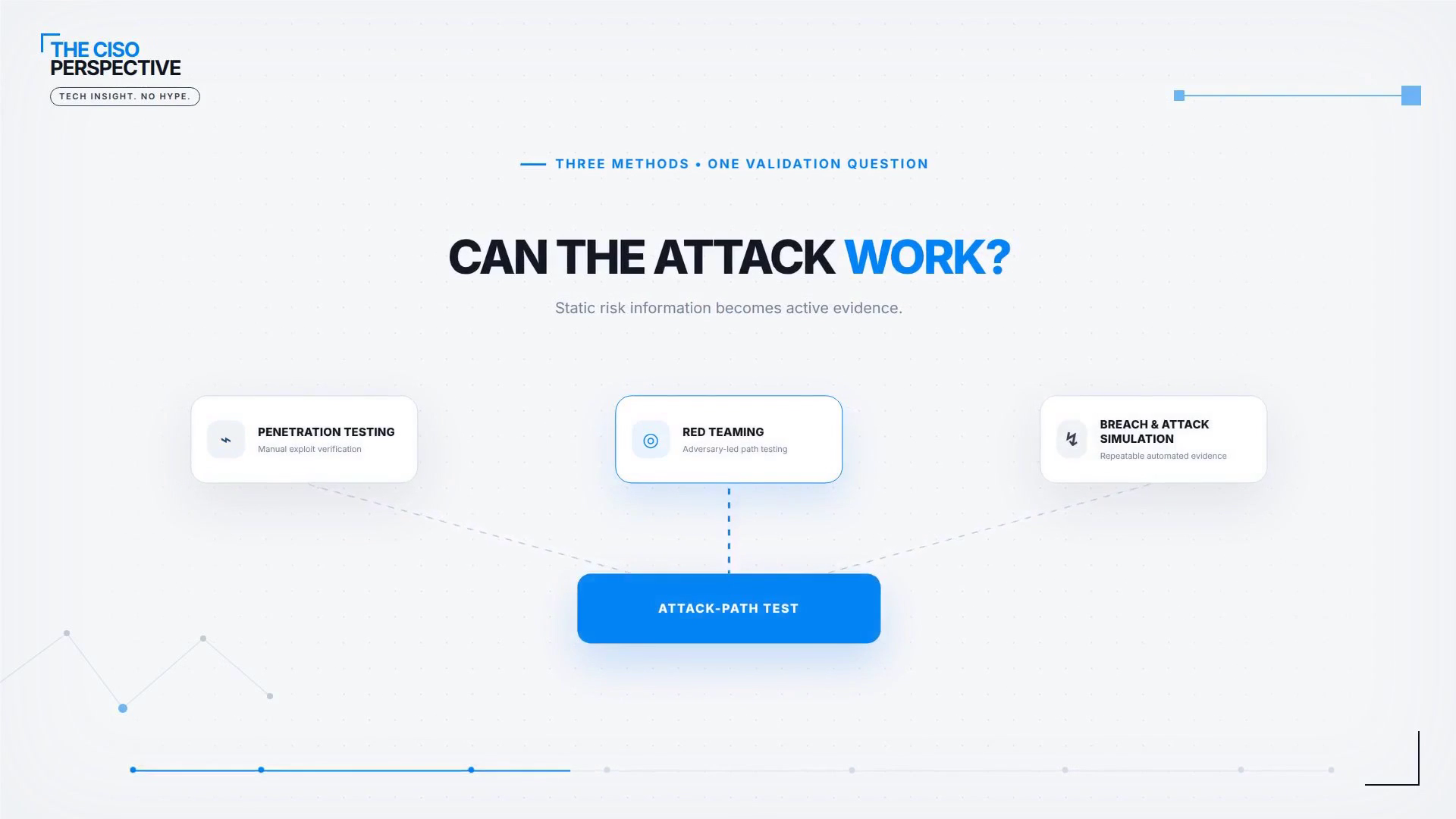
A highly prioritized exposure is still a hypothesis. Validation asks whether an attacker could actually use it in your environment, and whether your controls would stop them.
Gartner points to penetration testing, red teaming, and automated breach and attack simulation. In practice, test whether an internet-facing issue is really exploitable and whether it opens a path to a critical asset. A CVSS 10 on a system that is not reachable, is network-restricted, and sits behind controls that break the path may look critical on paper and much less so in evidence.
You move from “this looks risky” to “we have evidence this attack path matters.”
Stage 5: Mobilization
Now turn that evidence into action. The exposure needs an owner. Remediation teams need context: affected assets, business impact, validation evidence, remediation guidance, and an appropriate SLA, often via Jira or ServiceNow. After the fix, validate again so the exposure is actually closed.
The goal is not more findings
CTEM is not about finding more vulnerabilities. It is about getting better at identifying exposures that create real business risk, and doing something about them.
That work also gives you context the next time a critical CVE is announced. Instead of treating every 10 as an automatic fire drill, ask whether it creates meaningful risk to the assets that matter most.
Then repeat. Environments change. New vulnerabilities appear. New assets show up. Attackers change techniques. The exposures that matter today may not be the ones that matter tomorrow.
That continuous cycle is the point of CTEM.
We walk the full five-stage cycle with a practical example in the video What Is CTEM? Continuous Threat Exposure Management Explained on The CISO Perspective YouTube channel. It goes public Tuesday, October 6, 2026, at 10:30 AM ET. If it is not live when you click through, subscribe so it is there when it publishes.


Leave a Reply